Consult & assess
The concern, tissue quality, facial structure, skin history and treatment expectations are reviewed.

FORMA · BURFORD, OXFORDSHIRE
Non-invasive bipolar radiofrequency for selected skin-firmness and mild laxity concerns.
Forma delivers controlled bipolar radiofrequency energy through the skin surface without needles. The aim is progressive tissue heating rather than injury through penetration. At Face for Soul, it is considered when a lower-intensity, non-invasive RF approach fits the concern and the anatomy.

01 · THE TREATMENT
Forma uses bipolar radiofrequency to heat tissue from the skin surface while monitoring treatment temperature.
RF energy generates heat within tissue rather than relying on a light-absorbing chromophore. Controlled heating is used to support collagen remodelling and selected tightening or firmness goals over time.
Forma is different from Morpheus8. Morpheus8 combines needles with RF energy at programmed tissue depths, while Forma remains non-invasive. The difference is not simply one of comfort: the mechanisms, treatment intensity and appropriate indications are different.
Skin quality, laxity, tissue thickness, facial structure and the degree of change are considered first.
Bipolar RF energy is delivered across the skin surface while temperature is monitored during treatment.
Controlled tissue heating is sustained according to the treatment area and patient tolerance.
Firmness and skin-quality changes are assessed over time before deciding whether further treatment is useful.
02 · SUITABILITY
A non-invasive treatment can still be the wrong treatment. Forma is most useful when the concern is mild enough for surface-delivered RF and when stronger structural or resurfacing mechanisms are unnecessary.
01 MAY BE CONSIDERED
02 ANOTHER ROUTE MAY FIT BETTER
VAIVA'S ASSESSMENT
The assessment separates mild skin-quality change from structural volume loss, deeper laxity and concerns that need another mechanism entirely.
Burford · West Oxfordshire · Cotswolds
Mild firmness change is separated from more advanced descent or structural ageing.
Skin and subcutaneous tissue are considered before selecting an RF treatment intensity.
Bone, fat, volume distribution and lower-face support are considered so a surface treatment is not expected to correct a structural problem.
Inflammation, barrier instability and recent procedures can change timing or treatment choice.
Lower downtime can be useful, but it should not become the reason to choose a treatment that is too mild for the concern.
Morpheus8, microneedling, injectables, skincare, surgery referral or no treatment may be more relevant.
Forma / Morpheus8 / microneedling / injectable treatment / skincare / referral / wait / no treatment
CLINICAL RESTRAINT
03 · APPOINTMENT
Energy delivery and treatment time are adjusted according to area, tissue response and the planned degree of heating.
The concern, tissue quality, facial structure, skin history and treatment expectations are reviewed.
The treatment area is cleaned and prepared so the handpiece can move consistently across the skin.
Bipolar RF energy is applied while temperature feedback is used to guide treatment.
The treatment area is worked methodically rather than using brief maximum-energy passes.
Further treatment is based on the original indication and visible response rather than assuming every patient needs a fixed package.
04 · RESULTS & RECOVERY
The skin may feel warm and appear mildly pink immediately after treatment.
Transient redness or warmth usually settles relatively quickly.
Any change in firmness or skin appearance develops progressively rather than as an immediate correction.
The response determines whether further Forma treatment or a different mechanism is more appropriate.
Published bipolar RF studies most commonly assess skin laxity, firmness, texture and overall appearance. Changes are generally modest and study methods vary, so Forma should not be positioned as a non-surgical facelift or as a replacement for treatment of structural volume loss.
Published Forma studies have commonly used repeated treatment sessions. There is no universal course: frequency and number should follow the indication and response rather than a preset maintenance schedule.
Temporary redness, warmth, tenderness or swelling can occur. Thermal devices can also cause burns, pigment change or other tissue injury if used inappropriately, although published Forma studies have generally reported mild short-term effects. Conservative temperature-controlled treatment remains important.
05 · BEFORE & AFTERCARE
Forma usually requires less recovery than needle-based RF, but skin should still be treated according to its condition before and after the appointment.
Tell the clinic about recent procedures, active inflammation, medicines, implanted devices and any relevant changes in health.
Allow temporary heat or redness to settle and avoid unnecessary irritation if the skin feels sensitive.
Continue a sensible skincare routine and daily photoprotection appropriate to your skin.
SKIN APOTHECARY
Products are shown only when available online. Home care may support the wider plan but does not reproduce the effect of controlled RF heating.
Explore medical skincare →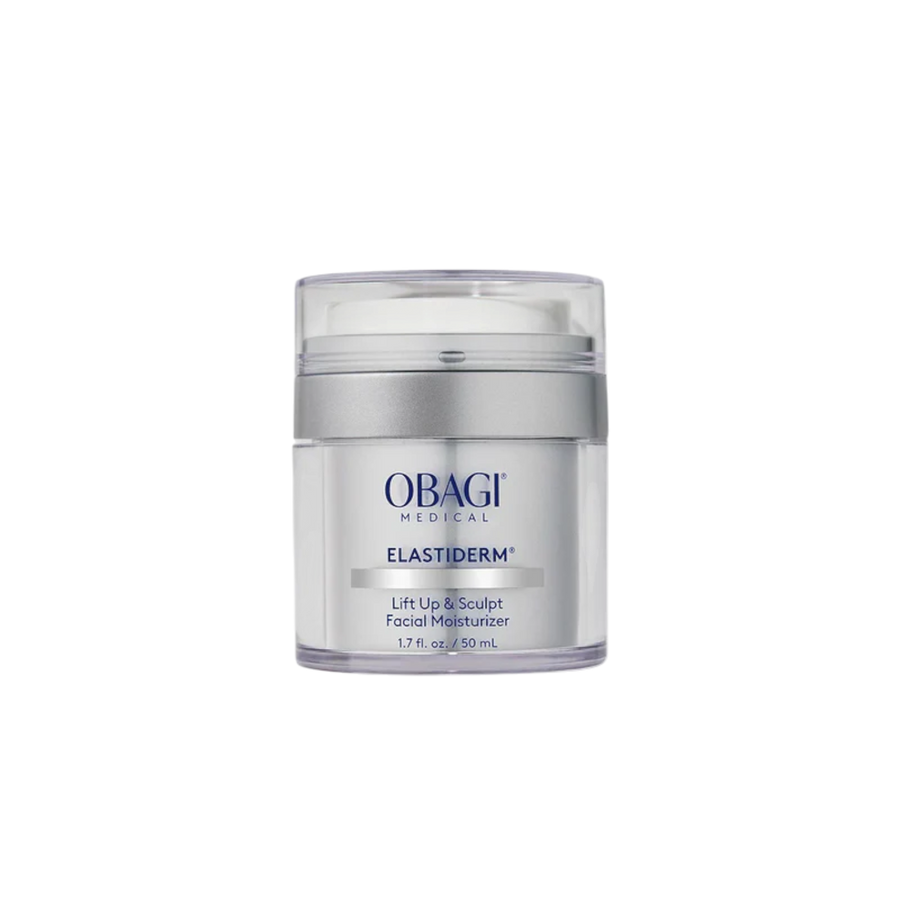
A moisturiser option for selected firmness-focused facial skincare plans.
View product →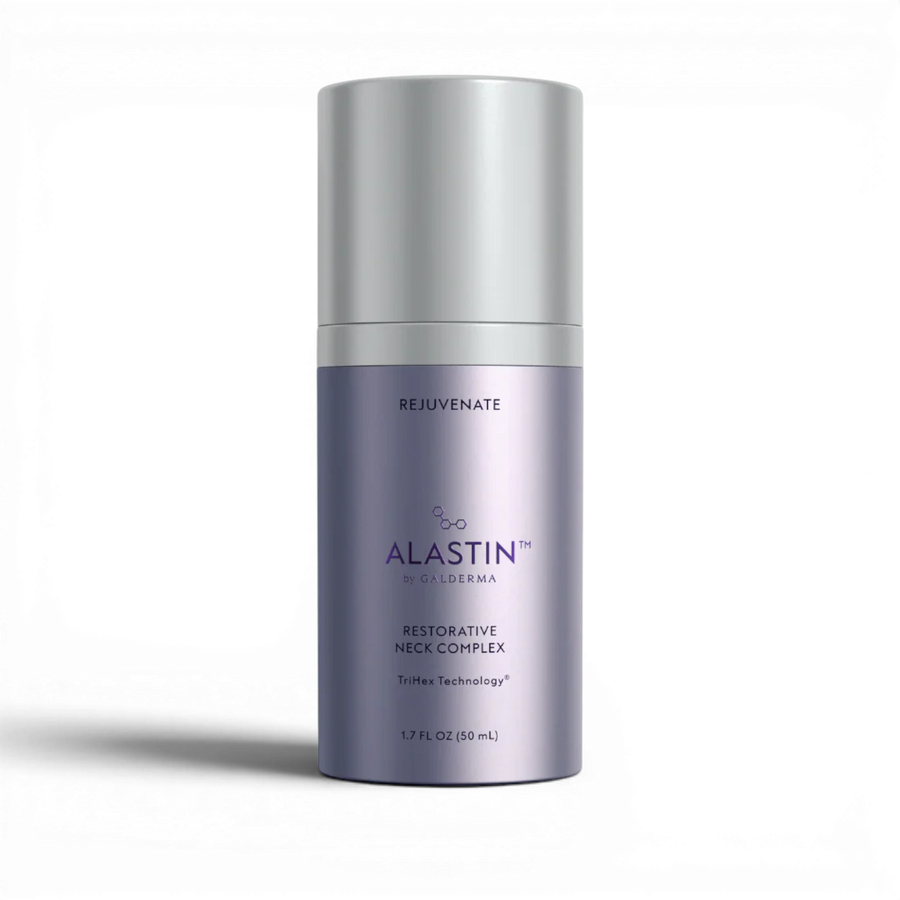
A neck-care option for selected patients where home care is part of the wider plan.
View product →
Daily mineral SPF support for exposed skin.
View product →NOT SURE WHETHER YOU NEED FORMA OR A STRONGER MECHANISM?
Forma, Morpheus8, injectables and skincare address different levels of facial change.
06 · CHOOSING THE MECHANISM
The useful question is not which device is newest, but how much remodelling the tissue actually needs.
07 · CLINICAL EVIDENCE
The broader evidence for non-invasive RF facial rejuvenation is encouraging but heterogeneous and should not be read as Forma-specific evidence. A 2025 systematic review included 15 studies and 1,230 participants across several RF technologies and study designs, with most studies being non-randomised and only a minority focused on bipolar RF. Forma-specific evidence is smaller and largely based on small prospective studies and case series: a 2022 study of 22 patients treated for submental laxity used four sessions and reported statistically significant improvement with transient erythema as the common short-term effect; an earlier prospective case series of 14 evaluable patients reported improvement after four to six treatments; and a split-face histological study of four patients demonstrated collagen-related changes after repeated temperature- and impedance-controlled RF. These studies support cautious use for selected mild laxity and skin-quality goals, but they do not justify describing Forma as equivalent to surgery, deeper RF microneedling or structural treatment.
08 · LONGER-TERM PLANNING
Some patients may benefit from a course or occasional maintenance. Others may reach the limit of what non-invasive RF can reasonably achieve and need another approach or no further treatment.
09 · FAQs
Forma is a non-invasive bipolar radiofrequency treatment. It delivers RF energy through the skin surface while treatment temperature is monitored.
Forma is needle-free and lower intensity. Morpheus8 combines microneedles with RF energy at programmed tissue depths. Morpheus8 may be more appropriate for selected scarring, texture or deeper remodelling goals, while Forma may suit milder firmness concerns.
Published bipolar RF studies show measurable improvement in selected mild laxity and firmness concerns. It should not be presented as equivalent to surgery or as a treatment for advanced tissue descent.
It may be considered when mild skin laxity contributes to lower-face change. Jowling can also reflect fat distribution, ligament changes, skeletal support and volume loss, so a non-invasive RF treatment may not address the main cause.
A small Forma study in 22 patients with submental laxity reported a statistically significant reduction in measured submental fat volume after four treatments. That does not mean Forma should be used as a general facial fat-reduction treatment. At Face for Soul, it is used primarily for selected skin-quality and firmness goals, and unnecessary volume loss would not be treated as a desirable outcome in areas where facial fat is structurally important.
There is no universal number. Device-specific studies have often used a course of repeated treatments, but the number and spacing should follow the indication and response.
Forma is non-invasive and published studies generally describe little recovery. Temporary warmth, redness or mild swelling can occur.
Face for Soul is based in Burford, Oxfordshire, welcoming patients from West Oxfordshire and across the Cotswolds. Treatment follows consultation and suitability assessment.